How College Admissions Really Works Today: A Parent’s Holistic Review to Build a Competitive Student Application
 By Jordan Midea
 Services
College admissions have changed faster in the last ten years than in the previous three decades combined. Application volumes are at record highs, acceptance rates continue to fall, and test-optional policies have rewritten long-standing assumptions about SAT and ACT scores. Students now apply to more schools than ever, while colleges quietly adjust priorities around majors, geography, institutional goals, and diversity of experiences. For families, the result feels chaotic. Strong grades no longer guarantee outcomes, and familiar benchmarks don’t carry the same weight they once did.
At the center of this shift is holistic admissions review. Colleges no longer evaluate students by numbers alone; they assess context, character, impact, and long-term potential. Parents often expect a merit-based formula, while admissions teams evaluate narratives, intellectual curiosity, and alignment with campus needs. This disconnect leads to frustration and missed opportunities. Empowerly helps families build a competitive student profile with the right combination of academics, extracurriculars, and communication skills, by leveraging data-driven insights with one-on-one college counseling, giving students a higher chance of getting accepted based on how admissions decisions are actually made today.
The Shift From Numbers to Narrative
Why GPA And Test Scores No Longer Guarantee Admission

-
In 2025, most selective colleges continue to operate under test-optional policies, meaning SAT and ACT scores, if submitted, are only one part of the evaluation. Admissions officers now emphasize essays, recommendations, and extracurricular impact to understand a student’s potential beyond academics.
-
Admissions leaders consistently report that grades and test scores alone no longer differentiate applicants. At highly competitive schools, thousands of students present near-perfect GPAs and rigorous coursework.
-
Colleges are also responding to inequities tied to standardized testing, including unequal access to preparation resources and socioeconomic disparities. This has accelerated the move toward evaluating students within a broader context.
Empowerly helps families understand how test-optional admissions actually work, using real admissions data to clarify when scores help, when they don’t, and what matters more.
How Colleges Evaluate Students As Whole People

- Modern holistic admissions considers academic performance, personal qualities, communication skills, and lived experiences together rather than in isolation.
- Admissions teams look for authenticity, curiosity, resilience, and the ability to contribute meaningfully to campus life and to the specific major of interest.
- Some institutions use sophisticated technology and AI tools to support application review, but final decisions are still made by human readers focused on long-term student potential.
Empowerly guides students in shaping authentic and competitive application narratives that reflect who they want to become, not just what they’ve achieved.
Key Components of Holistic Review

Academic rigor and performance
-
Colleges evaluate GPA alongside course difficulty, including honors, AP, or IB classes when available.
-
Students are reviewed within the context of their school, recognizing that not all schools offer the same academic opportunities.
Extracurricular depth and impact
-
Sustained involvement matters more than long activity lists.
-
Colleges value leadership, initiative, and measurable impact within schools, communities, or personal projects.
Personal qualities and character
-
Traits such as integrity, empathy, initiative, and collaboration are increasingly important in admissions decisions.
-
These qualities are evaluated through essays, recommendations, and sometimes supplemental assessments.
Essays and storytelling
-
Essays play a central role in test-optional admissions.
-
Strong essays reveal how a student thinks, what they value, and how they may contribute to campus culture.
Letters of recommendation
-
Recommendations offer insight into character, classroom engagement, and intellectual curiosity.
-
Admissions teams look for specific examples of growth rather than generic praise.
Contextual factors
Holistic review accounts for the environment in which a student has learned and grown, including:
-
School resources, grading norms, and course availability
-
Family responsibilities, first-generation status, and socioeconomic context
-
Access to extracurriculars, enrichment, and mentorship
Students are evaluated relative to their circumstances, not against applicants with vastly different advantages.
Empowerly helps students align every part of their application with these holistic criteria, using data-driven analysis and personalized guidance to ensure no critical component is overlooked.
The Hidden Factors Parents Don’t See

Institutional Priorities
Colleges do not admit students one by one. They build an incoming class, and that means institutional priorities influence decisions in ways most families never see.
Majors in demand
-
Colleges adjust admissions decisions based on program capacity and workforce demand.
-
STEM fields such as computer science, engineering, and data science remain highly competitive because demand far exceeds available seats.
-
Humanities and some social science majors may admit at higher rates simply because they have more space.
Geographic diversity
-
Many universities intentionally recruit students from a wide range of regions to avoid over-reliance on local applicants.
-
Students from underrepresented states or countries may receive added consideration because they help diversify the class.
First-generation and underrepresented students
-
Test-optional policies can increase diversity when institutions actively prioritize it.
-
Colleges often give additional consideration to:
-
First-generation college students
-
Low-income students
-
Students from historically underrepresented racial or ethnic backgrounds
-
These priorities align with institutional missions and long-term equity goals.
Legacy and donor considerations
-
At some private institutions, legacy applicants may still receive modest consideration, though many schools have reduced or eliminated this practice.
-
Donor-related applicants are rare and typically considered only where philanthropy plays a major role in funding aid or facilities.
-
These factors are not guarantees and are weighed alongside many others.
Empowerly helps families understand how institutional priorities quietly shape admissions outcomes and how students can position themselves strategically within those realities.
Institutional Research and Predictive Modeling

Modern admissions offices rely heavily on data to manage enrollment.
How colleges predict enrollment
-
Colleges use predictive modeling to estimate which admitted students are likely to enroll.
-
Models may consider:
-
Past enrollment patterns
-
Campus visits and engagement
-
Academic interests
-
Financial aid needs
-
Test-submission behavior
-
These tools help schools avoid over- or under-enrollment.
Why yield prediction affects decisions
-
Colleges must meet precise enrollment targets to manage housing, staffing, and budgets.
-
If a student appears unlikely to enroll, a college may:
-
Place them on the waitlist
-
Admit them to a different program
-
Offer less merit aid
-
Students who appear more likely to enroll may face fewer uncertainties.
Empowerly uses admissions data and enrollment trends to help families understand how likelihood-to-enroll signals can affect decisions and financial aid outcomes.
Test-Optional Realities

Test-optional policies remain widespread in 2025, but they do not work the same way at every school.
What test-optional really means
-
Colleges review applicants with or without scores, but how much scores matter varies widely.
-
Outcomes depend heavily on each institution’s priorities and values.
-
Some colleges still weigh scores heavily when submitted, while others focus almost entirely on non-test factors.
When submitting scores helps
-
The score is above the school’s typical admitted range.
-
The student attends a school with grade inflation or limited rigor.
-
The student applies to highly quantitative majors such as engineering, computer science, or business.
When submitting scores doesn’t help
-
The score falls below the school’s usual range.
-
The transcript and activities already demonstrate strong academic ability.
-
The institution reports similar or higher admit rates for test-optional applicants.
Empowerly helps families decide when submitting test scores strengthens an application and when a test-optional strategy is the smarter choice.
How Admissions Officers Actually Read Applications in 2025
Understanding how admissions officers evaluate applications can transform the way families approach the college process. While the process may feel mysterious from the outside, the workflow inside an admissions office is surprisingly structured—and often much faster than parents expect. Here’s a clear, insider-style look at how applications are read, scored, debated, and ultimately selected in 2025.
The “First Read”: Where Every Application Begins

Who Reads the File
Every application starts with a regional admissions officer—the staff member responsible for your geographic area. This person knows your local schools, grading systems, and opportunities available, which means they can evaluate your student in context rather than against applicants from entirely different environments.
How Long They Spend (Often Just Minutes)
The first read is fast. Admissions officers often spend 8–12 minutes reviewing an entire file. With thousands of applications to get through, they must quickly extract the most important information: academic rigor, grades, extracurricular impact, essays, recommendations, and personal qualities.
Scoring Systems and Rubrics
Most colleges use structured rubrics to ensure consistency. These rubrics typically score categories such as:
-
Academic strength and course rigor
-
Intellectual curiosity
-
Extracurricular depth and impact
-
Personal qualities and character
-
School and family context
The first reader summarizes the application and assigns preliminary ratings that will guide later committee discussions.
Empowerly helps students shape applications that surface the right signals quickly, ensuring key strengths stand out during those critical first minutes of review.
Committee Review: Where Decisions Take Shape

How Applications Are Discussed
Once the first read is complete, the application moves to committee, where multiple admissions officers review the summary and key materials. This is where the applicant is evaluated relative to the rest of the pool—not just on their own merits.
The Role of Advocacy
The first reader often becomes the student’s advocate, presenting their strengths and explaining any contextual factors that shaped their academic or personal journey. A strong advocate can make a meaningful difference, especially for students on the bubble.
How Tie-Breakers Happen
When two or more applicants are similarly qualified, committees consider factors such as:
-
Institutional priorities (majors, programs, mission-driven goals)
-
Geographic or experiential diversity
-
Special talents (arts, athletics, research)
-
Likelihood of enrollment (yield prediction)
Tie-breakers are rarely about who is “better”—they’re about who fits the class the institution is trying to build.
Empowerly helps students anticipate committee-level comparisons and position their profiles, so advocates have clear, compelling narratives to present.
The Final Shaping of the Class

Balancing Majors, Demographics, and Institutional Needs
Admissions decisions are not made one at a time—they’re made with the entire incoming class in mind. Colleges must balance:
-
Oversubscribed majors (like engineering or computer science)
-
Geographic representation
-
First-generation and underrepresented students
-
Artistic and athletic needs
-
Institutional goals and mission
This is why a student who looks “perfect on paper” may still be denied: the institution may simply have too many applicants with similar profiles.
Why Strong Applicants Still Get Rejected
Even exceptional students face rejection for reasons that have nothing to do with their abilities. Common reasons include:
-
Limited space in high-demand majors
-
Too many applicants from the same school or region
-
Institutional caps on certain academic interests
-
Enrollment management concerns
-
The need to maintain balance across backgrounds, talents, and academic fields
In a year of record-high application numbers and record-low admit rates, many outstanding students are competing for very few seats.
Empowerly helps families understand these behind-the-scenes dynamics and build smarter application strategies aligned with how classes are actually shaped.
Where Empowerly Fits In: Expert Guidance for a Complex Admissions Process
The college admissions landscape in 2025 is more competitive, more holistic, and more confusing than ever. Families are navigating test-optional policies, shifting institutional priorities, and application volumes that continue to break records. It’s no surprise that many parents are turning to professional guidance to help their students stand out. This is where Empowerly counselors play a transformative role.
The Complexity Of Holistic Review
Holistic admissions evaluate far more than grades and test scores. Colleges now assess academic rigor, extracurricular impact, personal qualities, essays, recommendations, and contextual factors at the same time. For families, understanding how these pieces work together can feel overwhelming. Professional guidance helps students present a cohesive narrative that aligns with how admissions officers actually read applications.
Limited School Counselor Availability
Most public school counselors manage hundreds of students, leaving little time for individualized college planning. Even in well-resourced schools, counselors often focus on scheduling and student wellness rather than strategic admissions positioning. Families who want deeper, more personalized guidance often need support beyond what schools can provide.
The Need For A Personalized Strategy
Every student brings a different academic profile, set of interests, and personal story. In today’s admissions environment, a one-size-fits-all approach simply doesn’t work. Families often need expert insight into:
-
Which colleges are realistic, reach, and safety options
-
How to build a compelling extracurricular profile
-
What narrative threads make a student memorable
-
How to manage deadlines without burnout
Empowerly supports families at this decision point by translating a complex admissions process into a clear, personalized strategy built around each student’s strengths and goals.
What Empowerly Provides
One-On-One Counseling With Admissions Experts

Empowerly pairs students with experienced admissions counselors who understand how selective colleges evaluate applications. Counselors help students identify strengths, address gaps, and build profiles that reflect both achievement and potential.
Essay Coaching And Narrative Development

In a test-optional environment, essays carry more weight than ever. Empowerly’s essay coaches guide students in developing authentic personal statements and supplemental essays that communicate character, curiosity, and impact rather than generic accomplishments.
Extracurricular Strategy And Project Development

Selective colleges value depth, initiative, and sustained engagement. Empowerly helps students strengthen existing activities, pursue leadership opportunities, and develop passion-driven projects that align with their interests and long-term goals.
Data-Driven Tools Like The Empowerly Score®
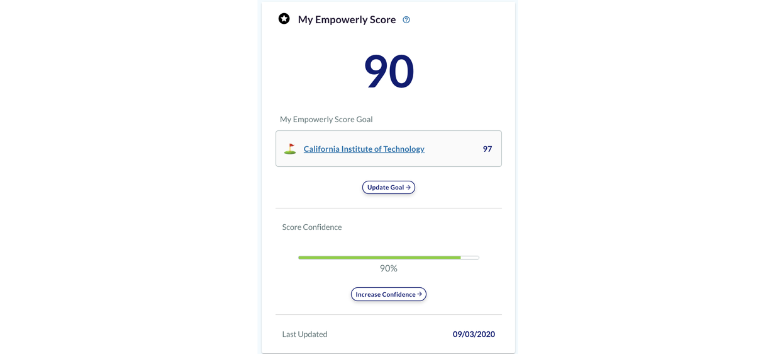
The Empowerly Score® offers a data-backed view of a student’s competitiveness across different colleges. Families gain clearer expectations, more realistic college lists, and better-informed application decisions.
Application Planning And Stress Reduction

Empowerly provides structured timelines, clear milestones, and regular check-ins to keep students organized. This approach reduces stress, prevents last-minute scrambling, and helps families feel confident throughout the process.
College admissions do not reward flawless resumes. It rewards students who grow, explore their interests, and make intentional choices over time. A holistic review allows colleges to see effort, curiosity, and personal development, not just outcomes. For parents, the focus should be on understanding how admissions works today and creating a supportive environment where students feel encouraged to pursue what genuinely matters to them.
Families do not have to figure this process out alone. Empowerly supports parents and students with expert guidance built around real admissions practices, not outdated assumptions. Through personalized planning, clear strategy, and data-backed insight, Empowerly helps students present strong, honest applications and move through the process with confidence, clarity, and a sense of direction.