ExpressVPN Review 2026: Plans, Features, Pricing and Performance
 By Noah Roni

Affiliate Disclosure: We may earn a commission from qualifying purchases made through links in this article. This does not affect the price you pay.
Protecting your connection on public Wi-Fi, keeping everyday browsing more private, or securing several household devices can all make a VPN worth considering.
ExpressVPN combines its core virtual private network with privacy and cybersecurity tools across three subscription tiers. Its apps cover major computers, phones, streaming devices, and routers, while its server network currently spans 113 countries.
This ExpressVPN review looks at security, speed, streaming, device support, current ExpressVPN plans, pricing, and the features that separate Basic, Advanced, and Express Pro.
What Is ExpressVPN?

Secure internet traffic through an encrypted VPN connection while replacing your normal public IP address with one associated with the selected VPN server.
ExpressVPN supports Windows, macOS, Linux, iOS, Android, routers, Apple TV, Fire TV, Android TV, and additional compatible platforms. Its current subscription lineup includes:
- Basic
- Advanced
- Express Pro
Every tier includes the core ExpressVPN service and ExpressMailGuard, while higher plans add more privacy and cybersecurity tools. ExpressKeys is included with Advanced and Pro, while ExpressAI is reserved for Pro. Identity Defender is currently limited to eligible U.S. customers and varies by tier.
A VPN can improve connection privacy and security, but it does not provide complete anonymity or eliminate every online threat.
ExpressVPN Features at a Glance

Compare more than the server count when looking at ExpressVPN features.
Core tools include:
- Lightway VPN protocol
- TrustedServer RAM-only infrastructure
- Internet Kill Switch
- Split tunneling
- Private DNS
- Leak protection
- Ad and malicious-site blocking
- Tracker blocking on Advanced and Pro
- Dedicated IP availability
- Multiple-device support
- Servers in 113 countries
- 24/7 support
- 30-day money-back guarantee for eligible first-time users
The biggest differences between plans come from simultaneous connection limits and the additional privacy tools bundled around the VPN. Basic focuses on the core service, Advanced adds tools such as tracker blocking and ExpressKeys, and Pro expands into a wider cybersecurity package.
Compare Current ExpressVPN Options
How ExpressVPN Handles Privacy and Security
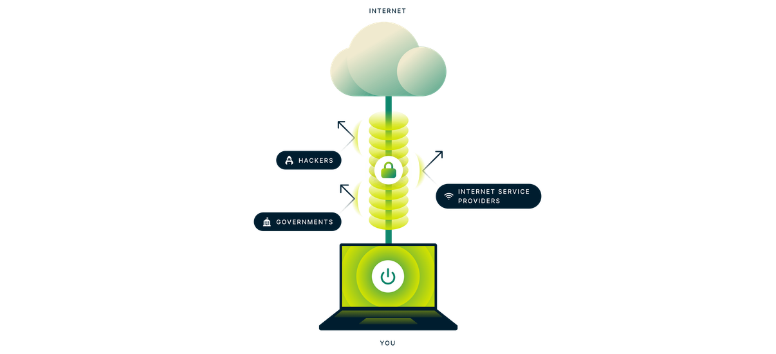
Protect traffic in transit with encryption and an infrastructure designed to reduce persistent information stored on VPN servers.
ExpressVPN uses private DNS on its own servers and provides protections designed to reduce DNS, IP, and WebRTC leaks.
TrustedServer
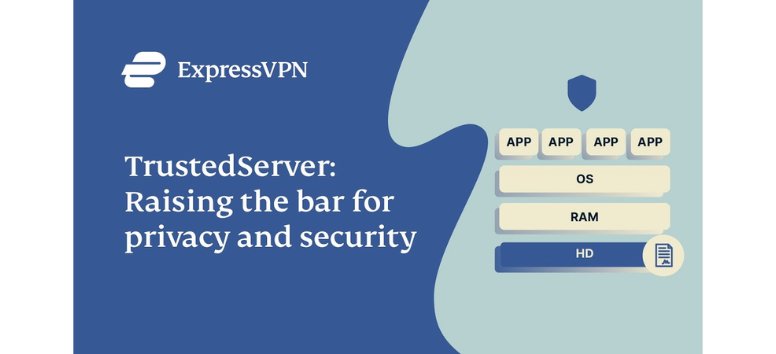
TrustedServer runs ExpressVPN servers using RAM instead of conventional hard drives. RAM is volatile, so information stored locally disappears when the server restarts. ExpressVPN also reloads the software stack during startup rather than relying on software that remains installed indefinitely.
That does not make a subscriber anonymous in every situation, but it reduces dependence on persistent local storage.
Internet Kill Switch
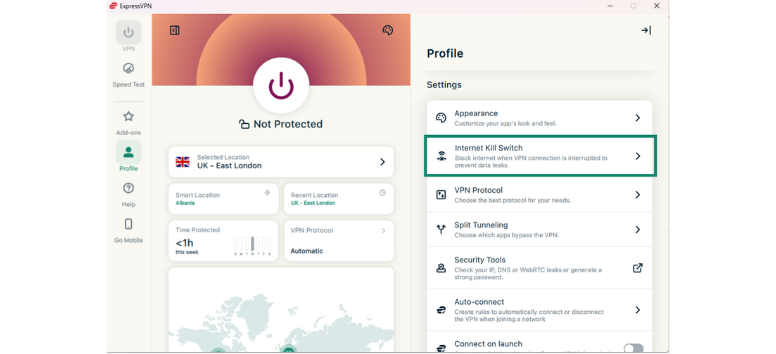
The Internet Kill Switch is designed to stop internet traffic if the VPN unexpectedly disconnects, preventing the device from automatically falling back to an unprotected connection.
Split Tunneling
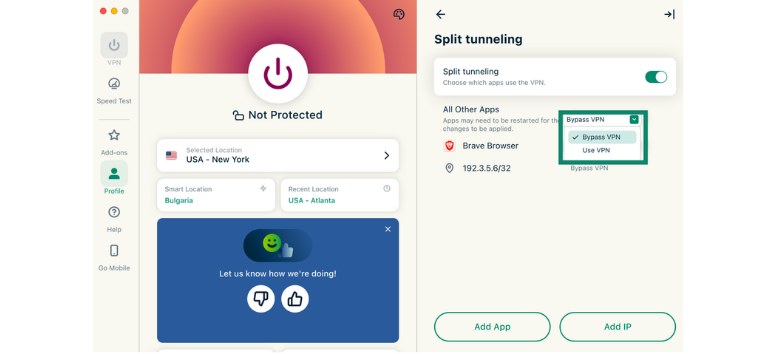
Split tunneling lets supported devices decide which apps use the VPN and which continue through the regular connection. That can be useful when an app needs VPN protection while another needs direct access to local services.
Availability and controls vary by platform.
Protection Tools

Basic includes protection against ads and malicious sites. Advanced and Pro add tracker blocking and broader Advanced Protection functionality. ExpressVPN also offers parental controls for blocking adult sites, with current availability differing by plan.
These tools support safer browsing but do not replace good security practices.
Check the Latest ExpressVPN Offer
Lightway, Speed and Everyday Performance

Connect through Lightway, ExpressVPN's proprietary VPN protocol built for quick connections, stability, and efficient performance.
Lightway is especially useful on mobile devices that switch between Wi-Fi and cellular connections because it reconnects quickly.
Actual ExpressVPN speed depends on factors such as:
- Original internet speed
- Distance from the VPN server
- Server location
- Device performance
- Network congestion
- Internet provider
- Wi-Fi quality
Any VPN can affect speed because traffic takes an additional encrypted route through the VPN server.
A nearby server will generally create a shorter route than one on the other side of the world, although results vary by connection and location.
Try ExpressVPN Under Its Current Refund Terms
ExpressVPN for Streaming, Gaming and Travel
Use a VPN where encrypted traffic and location flexibility solve an actual need.
Streaming

ExpressVPN for streaming supports popular computers, phones, televisions, and streaming hardware, including Apple TV, Fire TV, and Android TV.
A VPN may help you securely access services you already use while traveling, but access to every streaming platform, regional library, or title is never guaranteed. Streaming providers can change their VPN policies and technical restrictions.
Gaming

ExpressVPN can hide your public IP from the destination and encrypt traffic between your gaming device and the VPN server.
It does not guarantee lower ping or faster gameplay. A distant VPN server can actually increase latency.
Travel and Public Wi-Fi

Travel is one of the clearest reasons to use a VPN. Encrypting traffic between your device and ExpressVPN's server adds protection when connecting through hotel, airport, café, and other shared networks.
Advanced and Pro can also include holiday.com eSIM benefits on qualifying longer-term plans. Availability depends on the subscription and compatible device.
Explore ExpressVPN for Travel and Everyday Browsing
ExpressVPN Devices and Simultaneous Connections
Cover multiple devices under the same subscription. Current simultaneous connection limits are:
|
Plan
|
Simultaneous Connections
|
|---|---|
|
Basic
|
10
|
|
Advanced
|
12
|
|
Express Pro
|
14
|
ExpressVPN supports major computers, mobile devices, streaming platforms, and routers. Installing the VPN on a compatible router can also extend coverage to devices using that network.
For households with several laptops, phones, tablets, and streaming devices, the connection limit can be one of the simplest ways to narrow down the right plan.
Compare ExpressVPN Device Limits
ExpressVPN Plans and Pricing
Compare the first-term offer with the renewal rate before subscribing.
ExpressVPN currently offers monthly plans, 12-month subscriptions, and 2-year introductory offers that renew annually. Depending on the offer, the initial 2-year term can include extra months. ExpressVPN states that the initial price, renewal price, and renewal frequency are shown at checkout.
Current U.S. pricing pages are displaying different promotional variants for the introductory term, so the affiliate landing page and checkout should be treated as the final source for the first-term price.
The annual renewal rates currently shown across ExpressVPN's public pricing pages are:
|
Plan
|
Connections
|
Current Annual Renewal
|
|---|---|---|
|
Basic
|
10
|
$99.95/year
|
|
Advanced
|
12
|
$119.95/year
|
|
Express Pro
|
14
|
$199.95/year
|
Promotional pricing, taxes, plan terms, and available offers can change. ExpressVPN also states that renewal rates can change with advance notice.
Basic
Choose Basic when the VPN itself is your main priority.
It currently includes 10 simultaneous connections, ad and malicious-site protection, limited ExpressMailGuard, and the option to purchase a dedicated IP as an add-on.
Advanced
Step up to Advanced when you want more devices and additional privacy tools.
Advanced raises the connection limit to 12 and adds ExpressKeys, tracker blocking, and broader Advanced Protection. Eligible longer-term subscriptions can also include selected Identity Defender and eSIM benefits. Dedicated IP remains an optional add-on.
Express Pro
Consider Pro when you expect to use a broader cybersecurity bundle.
Pro includes 14 simultaneous connections, dedicated IP, ExpressKeys, full ExpressMailGuard capabilities, ExpressAI, and the wider eligible Identity Defender feature set for U.S. customers. Longer-term plans can also include additional eSIM benefits.
Check the Latest ExpressVPN Offer
Who Is ExpressVPN Best For?

Consider ExpressVPN when ease of use, multiple-device support, and broad international server coverage matter to you.
It may suit:
- Travelers using public Wi-Fi
- Households protecting several devices
- Streamers using TV and mobile apps
- Remote workers who value split tunneling
- Users who want a dedicated IP option
- People interested in password-management or privacy tools
- Gamers who want encrypted traffic and broad server choice
Basic is the more straightforward choice when you mainly want the VPN. Advanced makes more sense when tracker blocking and password management add value. Express Pro is aimed at users who will actually use its dedicated IP, AI, identity, and expanded privacy services.
Choose ExpressVPN when you want a VPN that covers multiple devices without complicating everyday setup.
Basic handles the core VPN experience. Advanced expands privacy protection and adds password management. Express Pro offers a broader security suite, including a dedicated IP and additional services.
The best option is not automatically the highest tier. Compare your device count, the tools you already pay for, the live introductory offer, and the annual renewal price before choosing.