Carvana Certified vs. Standard Listings: What’s the Difference (and Does It Matter)?
 By Jordan Midea
 Automotive
Shopping for a used car online starts with familiar filters: price, mileage, body style, model year, and monthly payment. Then the harder questions arrive. What condition is the vehicle really in? Has it suffered major damage? What happens if a mechanical problem appears after delivery?
A polished listing offers only part of the answer. Photos show paint scratches, wheel condition, and cabin wear, but they do not tell the full story about the engine, brakes, electronics, or previous damage.
That is where certification enters the picture. The key difference is not a badge beside the vehicle’s name. It is the set of standards and protections behind that badge.
Carvana Certified vehicles undergo a 150-point inspection and must have no reported accidents, fires, floods, or frame damage, according to CARFAX and AutoCheck. They also come with a free CARFAX report, limited warranty coverage, and a seven-day return policy. A standard listing from another dealer, marketplace, or private seller has no universal protection package. Each seller follows its own process.
So, does Carvana certification matter? Let’s look under the hood.
What Is a Carvana Certified Vehicle?

The Carvana Certified program gives online shoppers a defined vehicle standard before delivery. Carvana clearly states that vehicles can be identified as Carvana Certified, but the exact placement ("Inspection section of the Vehicle Details Page") is more of a website-interface claim that can change over time.
Every Certified vehicle:
-
Goes through a 150-point inspection
-
Has no reported accidents according to CARFAX and AutoCheck
-
Has no reported fire, flood, or frame damage
-
Any components that do not meet Carvana's quality standards are repaired or replaced as needed before sale.
-
Includes a free CARFAX vehicle history report
-
Comes with a limited warranty
-
Qualifies for a seven-day return period
Carvana also changes the oil and checks the fluids as part of its inspection process. A digital owner’s manual is available at no extra charge if the physical copy is missing.
The phrase “standard listing” needs some context. It is not an official Carvana category that sits opposite Carvana Certified. Here, it refers to a non-certified used-car listing from another dealership, online marketplace, auction, or private seller.
Some of those vehicles arrive with detailed service records and strong dealer warranties. Others are sold as-is with little more than photos, a short description, and the seller’s word. That wide range explains why buyers need to examine the protections behind each listing instead of judging it by the word “certified” alone.
The 150-Point Inspection: More Than a Clean Dashboard
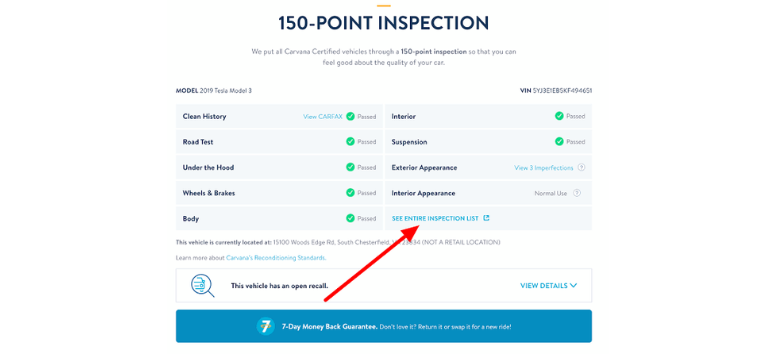
A freshly detailed cabin makes a strong first impression. Still, clean floor mats do not reveal worn brake components or a faulty climate-control system.
The Carvana 150-point inspection reviews a vehicle’s mechanical, cosmetic, and safety condition before it earns certification. Carvana’s published materials describe an inspection and reconditioning process that covers controls, equipment, brakes, tires, and cosmetic condition.
The process addresses several areas that shape daily ownership.
Mechanical Systems
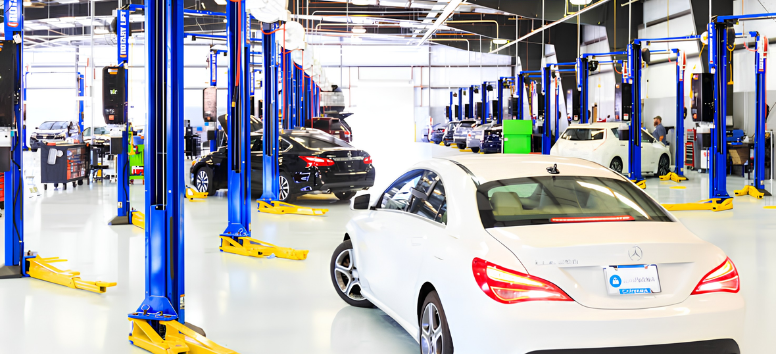
The engine and transmission deserve close attention in any used-car purchase. Problems in these areas rank among the most expensive repairs an owner faces. Steering, suspension, and drivetrain components also affect ride quality, handling, and performance.
An inspection gives buyers more information than a short online description. It creates a structured review before the vehicle reaches the listing page.
Still, the phrase “150 points” does not mean 150 guarantees. It refers to items reviewed during inspection. Vehicle age, mileage, maintenance, driving conditions, and normal wear continue to shape reliability after purchase.
Brakes, Tires, and Safety Equipment
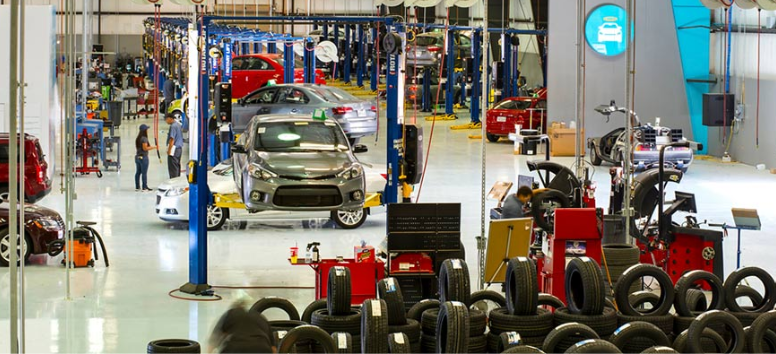
Brakes and tires directly affect road safety and near-term ownership costs. A buyer who discovers worn tires after purchase could face a four-figure replacement bill, especially on a truck, SUV, luxury model, or performance vehicle.
Exterior lights, seat belts, and related safety equipment also require close review. These items receive little attention in listing photos, yet they matter during every trip.
Certification places those checks within a defined process. A standard listing doesn't promise the same review unless the seller provides written inspection details.
Interior Controls and Electronics
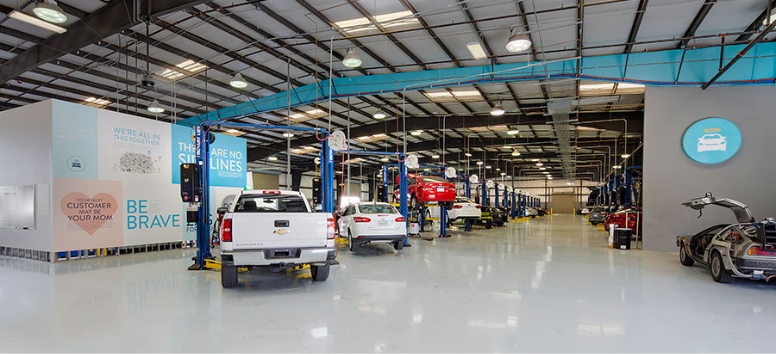
Today’s vehicles depend on screens, cameras, sensors, switches, and electronic controls. Even an older used car contains dozens of functions that deserve testing.
The inspection includes vehicle controls and equipment. Buyers should still check the air conditioning, windows, locks, infotainment system, cameras, dashboard warnings, seat adjustments, and charging ports during the return period.
A broken button sounds minor until it controls an expensive power seat or touch-screen system. Used-car costs often hide in these smaller details.
Exterior and Cosmetic Condition
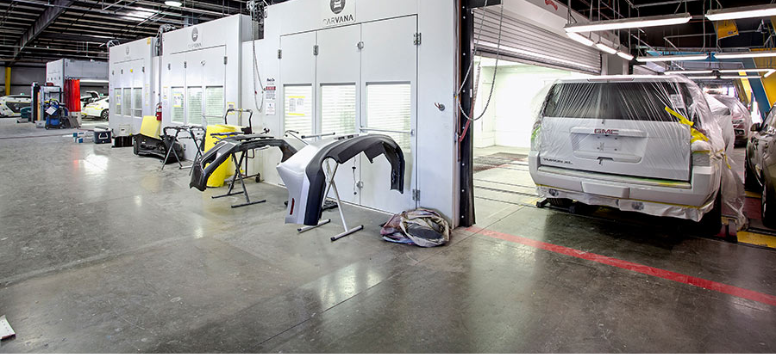
Used cars carry marks from previous owners. Scratches, small dents, wheel scuffs, and interior wear are part of the territory.
Carvana reviews cosmetic condition and reconditions vehicles before sale. Buyers should study every listing photo and read the disclosed imperfections. Certification does not turn a used vehicle into a factory-new one. It confirms that the car met Carvana’s stated standard when inspected.
A Clean History Report Is Helpful, but Not All-Knowing
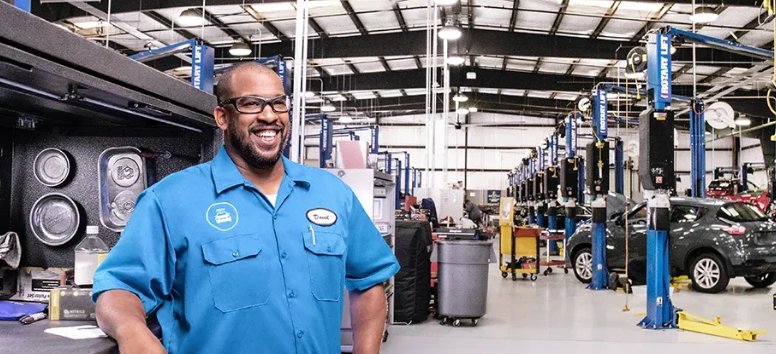
An inspection looks at the vehicle now. A history report follows the trail it left behind.
Carvana Certified vehicles must have no reported accidents, fire damage, flood damage, or frame damage according to CARFAX and AutoCheck. Carvana also provides a free CARFAX report on every vehicle details page. Buyers will find it under Details & Specs.
That report offers valuable clues about the car’s past. Accident records, ownership changes, title information, service entries, and mileage records help shoppers spot problems before signing a contract.
Past damage affects more than appearance. Frame damage raises structural concerns. Flood exposure harms wiring, sensors, upholstery, and mechanical parts. Accident history also affects resale value, financing, and insurance decisions.
However, no vehicle-history database captures every event. CARFAX and AutoCheck rely on information submitted by insurers, repair facilities, government agencies, and other sources. If an incident was never reported, it will not appear in the report. Carvana includes this limitation on its Certified Program page.
The Federal Trade Commission also warns that a history report does not replace an independent mechanical inspection. Reports document recorded history; they do not diagnose current mechanical faults.
Think of the report as a background check, not a crystal ball.
What the Carvana Worry Free Guarantee Covers
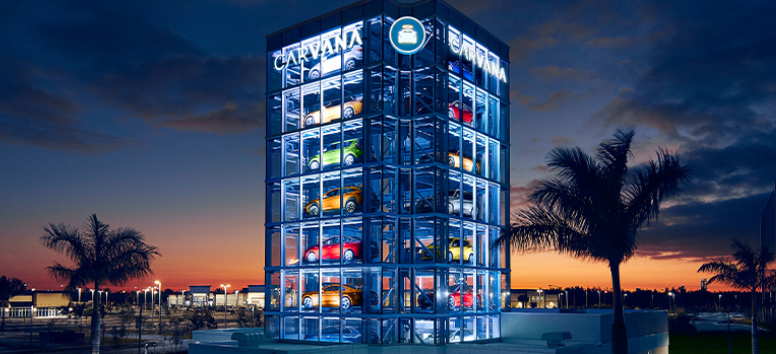
Online car shopping changes the usual order of events. At a dealership, buyers walk around the vehicle and take a test drive before completing the sale. With online delivery, much of that hands-on evaluation happens after the car arrives.
The Carvana Worry Free Guarantee addresses that gap through limited warranty coverage and a seven-day return policy.
Limited Warranty for 100 Days or 4,189 Miles
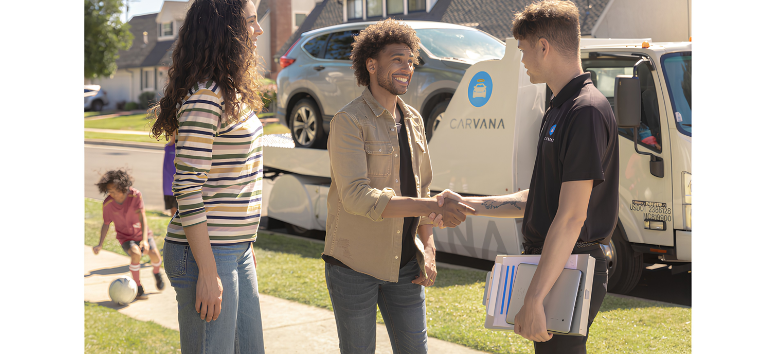
Every vehicle Carvana sells comes with a complimentary limited warranty lasting 100 days or 4,189 miles, whichever comes first. The limited warranty covers qualifying repairs and covered components subject to the warranty's terms, conditions, and exclusions.
The oddly specific mileage limit has a straightforward explanation. Carvana bases 4,189 miles on average driving of 41.89 miles per day over 100 days.
“Limited” remains the important word. The warranty does not cover every repair, cosmetic flaw, maintenance service, or wear item. Buyers should read the coverage documents for exclusions, deductibles, claim requirements, and repair-facility rules before purchasing.
That fine print is not just paperwork. It determines who pays when a warning light appears.
Seven Days to Return the Vehicle
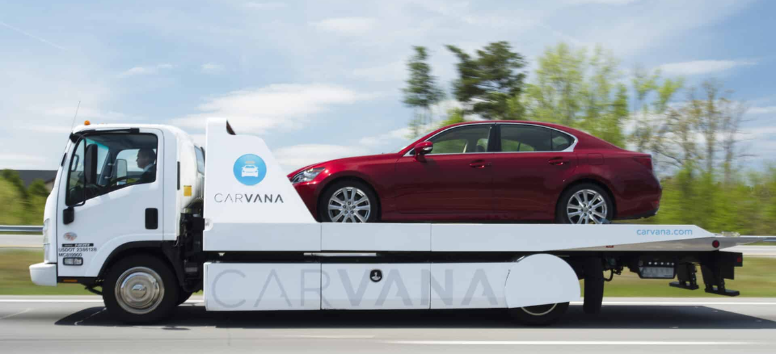
Carvana’s seven-day policy allows buyers to return an eligible vehicle for any reason during the return window. The buyer must contact Carvana and begin the return process within that period.
Those seven days create a valuable inspection window. The buyer gets time to drive familiar routes, check highway performance, test parking visibility, confirm passenger space, and inspect the car in daylight.
It is also the right time to schedule an independent mechanical inspection. A mechanic working for the buyer adds another set of eyes to the purchase and can identify concerns beyond the listing details.
Fees need close review. Carvana states that shipping charges are nonrefundable. Its support information separates shipping fees from delivery fees, with eligible delivery fees refunded under the seven-day guarantee.
How Standard Used-Car Listings Compare

A standard listing is not automatically a poor choice. Plenty of solid used vehicles sit on independent dealer lots, manufacturer-franchise lots, and private driveways. The difference is consistency.
The Inspection Could Be Extensive or Minimal
One seller provides a written multipoint inspection with repair records. Another completes only a state-required safety check. A private seller might have no recent inspection document at all.
Even the word “certified” needs scrutiny outside a formal program. Buyers should ask who performed the inspection, what they checked, what problems they found, and what repairs they completed.
A checklist with results tells the buyer far more than a badge.
Warranty Terms Vary Widely
Standard used vehicles appear under several sales arrangements:
-
As-is with no dealer warranty
-
Limited dealer warranty
-
Remaining factory warranty
-
Optional service contract
-
Third-party vehicle protection plan
The FTC requires dealers to display a Buyers Guide on used vehicles, including cars offered online. The guide identifies the vehicle as covered by a warranty or sold as-is. Private sellers generally fall outside this federal rule
Verbal promises should appear in writing. If a salesperson promises to repair a fault, replace a tire, or accept a return, the final contract should state the same terms.
History Reports Are Not Always Included
Some sellers provide a free history report. Others leave the task and cost to the buyer.
Always match the VIN on the report with the VIN shown on the dashboard, driver-side door area, and sales documents. A mismatch turns the report into information about a different car.
Buyers should also enter the VIN into the National Highway Traffic Safety Administration’s recall search. The tool identifies certain unrepaired safety recalls linked to a specific vehicle.
Returns Are Far From Universal
Many used-car purchases become final once the buyer signs the contract. A general federal three-day right to cancel a dealership car purchase does not exist.
Any return promise should include the deadline, mileage limit, vehicle-condition requirements, eligible refund, and excluded fees in writing. Without that written policy, the buyer should treat the sale as final.
So, Does Carvana Certification Matter?
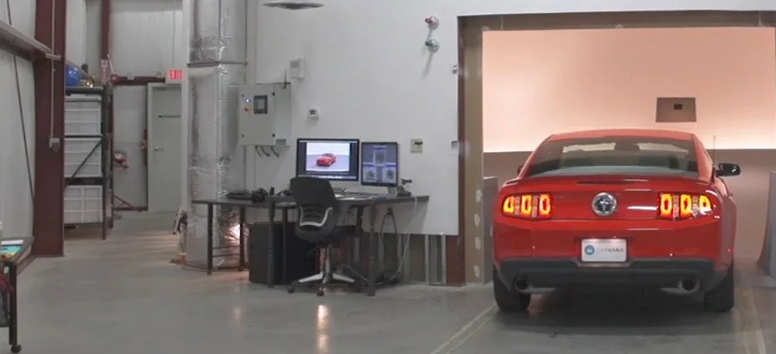
For shoppers buying a used car online, Carvana certification provides a clear starting point. The 150-point inspection, damage-history screening, free CARFAX report, limited warranty, and seven-day return period place several safeguards under one program.
That structure carries particular value for:
-
First-time used-car buyers
-
Shoppers purchasing from another city or state
-
People without a trusted local mechanic
-
Buyers who want time to evaluate the vehicle after delivery
-
Busy shoppers seeking a more consistent screening process
A standard listing still deserves consideration when the vehicle has complete service records, a strong independent inspection, clear warranty terms, and a price that accounts for its condition. Experienced buyers with access to a trusted mechanic also have more tools for evaluating an as-is vehicle.
Certification does not promise trouble-free ownership. No inspection predicts every future repair, and no history report contains events that were never recorded. The real value lies in the added checkpoints and written protections.
Questions to Ask Before Buying Any Used Car
Before purchasing any Carvana Certified vehicle or standard used-car listing, ask:
-
Is there a written inspection report?
-
Who completed the inspection?
-
What repairs were performed before listing?
-
Is a vehicle-history report included?
-
Does the VIN match across the car, report, and paperwork?
-
Are there open safety recalls?
-
What does the warranty cover?
-
Which repairs and parts are excluded?
-
Is there a deductible?
-
Is a return period included in writing?
-
Are shipping, delivery, or processing fees refundable?
-
Are maintenance records available?
-
Is an independent inspection permitted?
These questions turn a promising listing into a fact-based purchase.
Carvana Certified vehicles receive a 150-point inspection and must have no reported accident, fire, flood, or frame damage according to CARFAX and AutoCheck. Carvana also includes a free CARFAX report, a limited warranty lasting 100 days or 4,189 miles, and a seven-day return policy.
Standard listings follow the terms set by the individual seller. Some match or exceed parts of Carvana’s program; others offer no inspection record, warranty, or return option.
The certification badge deserves attention, but the paperwork matters more. Read the inspection details, study the history report, check the warranty terms, and arrange an independent inspection. A used car is still a used car. The smartest purchase starts with knowing exactly what stands behind the listing.