Byrna Review: Models, Features, Training, and Responsible Ownership
 By Gabi Thompson
 Electronics
Everyday preparedness starts with awareness, familiarity, and confidence in the equipment you choose to keep around you. With Byrna, that means looking beyond the launcher itself and understanding the model, designated supplies, training resources, storage, and routine care that support responsible ownership.
Byrna offers several CO₂-powered less-lethal launcher formats, from compact handheld models to larger shoulder-fired systems. The lineup also includes inert training products, carrying and organization accessories, defense sprays, manuals, and maintenance resources. The differences matter, especially because caliber, CO₂ size, magazine compatibility, and accessory requirements change across models.
What Is a Byrna?
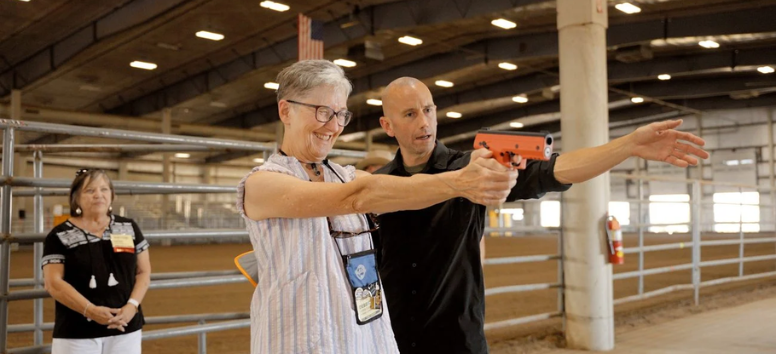
A Byrna is a CO₂-powered, less-lethal launcher that uses compressed gas to propel designated projectiles.
The current product family includes handheld launchers, larger shoulder-fired systems, training projectiles, carrying accessories, defense sprays, CO₂ supplies, and supporting documentation.
Byrna's launcher range uses different projectile and gas systems. The CL and CL-XL use .61-caliber projectiles, while products such as the SD, LE, and TCR use .68-caliber projectiles. That makes compatibility an important part of choosing supplies and accessories.
Responsible ownership goes beyond selecting a launcher. Reading the manual, practicing with compatible inert products, keeping equipment secure, and following model-specific maintenance guidance all deserve the same attention.
Explore Byrna's current product range.
Byrna Launcher Comparison: Understanding the Range
A useful Byrna launcher comparison starts with the role each design plays.
The CL family prioritizes compact dimensions. The SD sits in Byrna's established handheld range, while the LE adds a more advanced trigger and valve system. TCR and Mission 4 move into larger shoulder-fired formats with different CO₂ and magazine requirements.
There is no reason to treat those products as interchangeable. Size, caliber, power source, compatible magazines, accessories, and training supplies all change as you move through the lineup.
Byrna CL: Compact Size Leads the Design
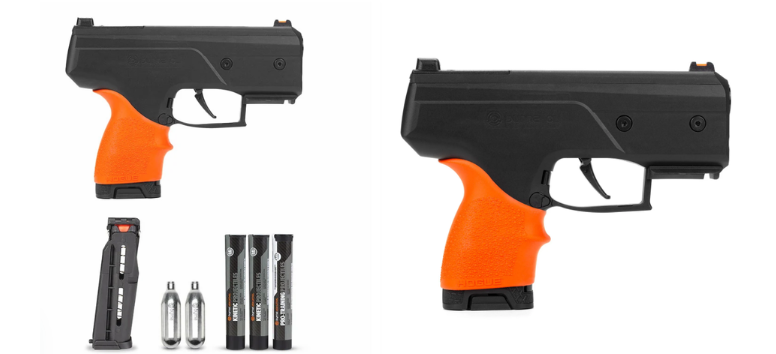
The Byrna CL is the compact option in Byrna's handheld family.
It uses .61-caliber projectiles and 8-gram CO₂ cylinders. Byrna's current universal kit includes two five-round magazines, while the launcher itself features fiber-optic sights, a loaded-chamber indicator, a Picatinny accessory rail, and a universal bolt pattern designed for compatible red-dot sights.
Key features include:
- .61-caliber projectile system
- 8-gram CO₂ operation
- Two five-round magazines in the universal kit
- Fiber-optic sights
- Loaded-chamber indicator
- Picatinny rail
- Red-dot-ready universal bolt pattern
- Byrna's pull-pierce CO₂ system
The caliber deserves particular attention when adding supplies. Standard .68-caliber projectiles and training rounds are not designed around the CL's smaller .61-caliber system.
Compact dimensions give the CL its clearest role in the lineup. Organization, designated supplies, and familiarity with its controls matter more than simply choosing it because it is smaller.
Byrna CL-XL: The Compact Line Steps Up
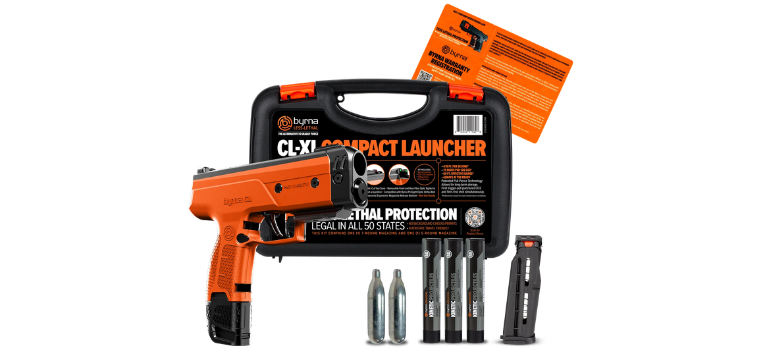
The Byrna CL-XL builds on the CL platform while changing several important details.
It remains a .61-caliber launcher, but switches to more widely used 12-gram CO₂ cylinders. Byrna says the longer configuration adds just over three-quarters of an inch compared with the standard CL.
Key features include:
- .61-caliber compatibility
- 12-gram CO₂ operation
- Optic-cut top cover
- Removable front and rear fiber-optic sights
- Accessory support
- One seven-round magazine
- One five-round magazine
The shared CL name does not make every accessory interchangeable. Checking the individual model specification remains important when adding magazines, optics, CO₂, projectiles, or training supplies.
Byrna SD: The Established Core Option
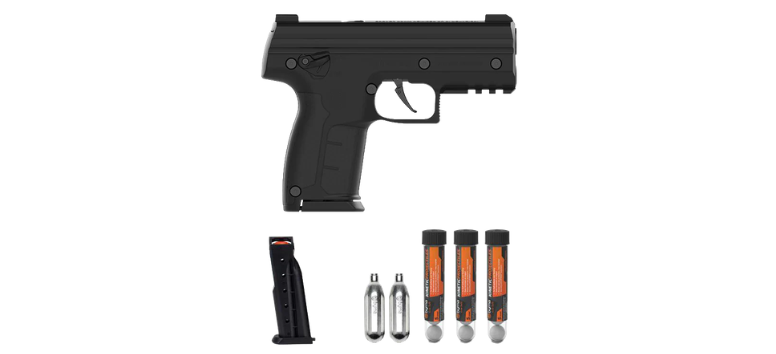
The Byrna SD occupies the established middle ground in Byrna's handheld family.
It uses .68-caliber projectiles and 8-gram CO₂ cylinders, separating its supply requirements from the newer .61-caliber CL family. Byrna's current support materials continue to list the SD within the models compatible with its 8-gram CO₂ supplies and broader .68-caliber ecosystem.
One advantage of the SD's longer presence in the lineup is the supporting catalog around it. Owners can find compatible magazines, CO₂ supplies, carrying accessories, training options, and product documentation designed around the platform.
The SD therefore makes the most sense as an established system rather than simply another handheld model beside the CL or LE.
Byrna LE: The Advanced Handheld Option
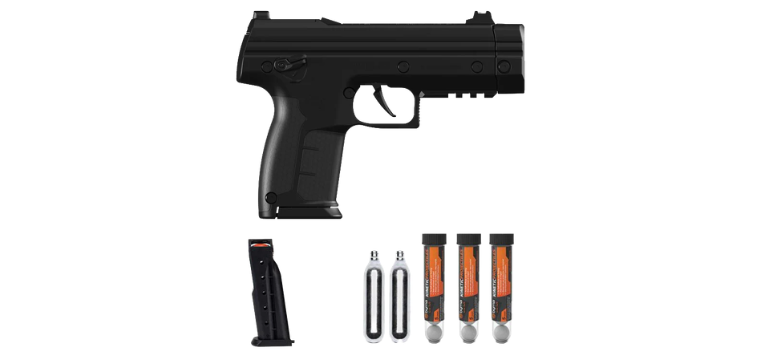
The Byrna LE moves toward Byrna's more advanced handheld configuration.
The LE uses .68-caliber projectiles and a 12-gram CO₂ system. Byrna highlights a redesigned trigger interface and valve assembly among its distinguishing hardware changes. Its documentation also describes an ambidextrous safe/fire switch.
That puts clear space between the LE and SD. The SD keeps the familiar .68-caliber handheld format with 8-gram CO₂, while the LE changes the gas system and introduces revised operating hardware.
Compare those differences by function rather than assuming the higher model simply adds cosmetic upgrades.
Byrna TCR and Mission 4: A Move Into Larger Formats
Byrna's shoulder-fired launchers sit apart from its compact handheld products.
Their larger dimensions, magazine systems, CO₂ requirements, manuals, and accessory layouts make it useful to treat them as separate formats rather than extensions of the pistol-style range.
Byrna TCR 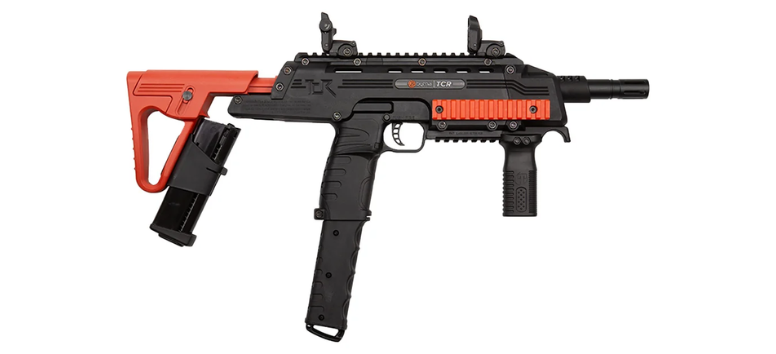
The Byrna TCR, or Tactical Compact Rifle, is a larger .68-caliber magazine-fed launcher.
Its current specifications include:
- 12-gram CO₂ operation
- Seven-round magazine
- 12-round magazine
- Quad Picatinny rail
- Folding front and rear sights
- Vertical foregrip
- Adjustable stock
Byrna's current product page notes that CO₂ and projectiles are not included with the basic TCR-and-magazines configuration.
The TCR's configurable layout and larger form factor introduce more equipment-management considerations than a CL, SD, or LE.
Byrna Mission 4
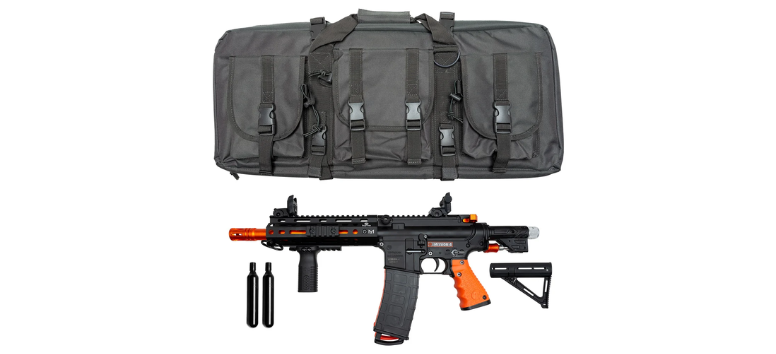
The Byrna Mission 4 moves further into Byrna's larger launcher family.
Its CO₂ setup uses 88-gram cylinders, clearly separating it from the 8- and 12-gram systems found elsewhere in the range. Byrna's current 88-gram CO₂ documentation lists those cylinders specifically for Mission 4 and references its 19-round magazine system.
The Mission 4 also has dedicated manuals, a quick-start guide, and model-specific technical documentation available through Byrna's product-document library.
That level of model-specific support reinforces a simple point: treat Mission 4 as its own system and follow the documentation written for it.
Byrna Defense Sprays Add Another Format
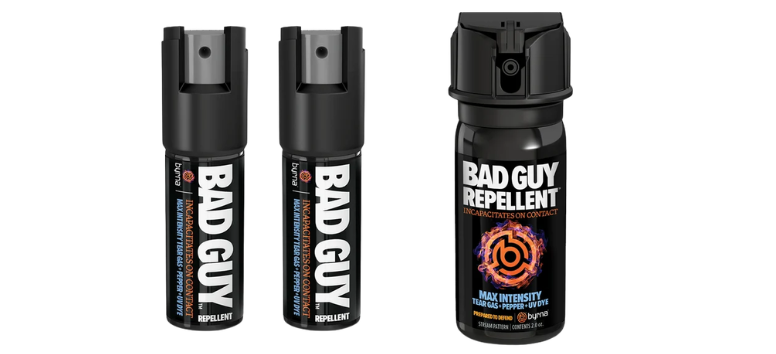
Byrna's personal-safety catalog isn't limited to launchers.
The company also sells Bad Guy Repellent, or BGR, defense sprays. These aerosol products provide a different format within the wider Byrna catalog and should be evaluated separately from launcher systems, projectiles, magazines, and CO₂ equipment.
That separation matters because a spray and a launcher have different operating, storage, and handling requirements. The best approach is to review the documentation associated with the exact product instead of treating all Byrna equipment as one system.
Make Training Part of Responsible Ownership
Training should begin with familiarity rather than assumptions.
Byrna sells inert practice products designed to let owners become more familiar with loading, controls, magazines, and general handling without using chemical-irritant payloads.
Byrna .68-Caliber Pro Training Projectiles 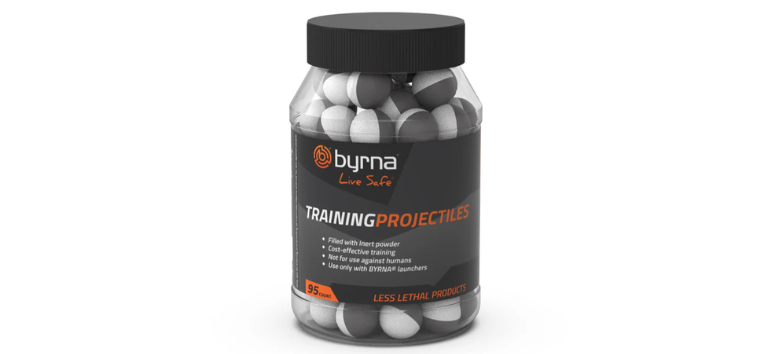
Byrna .68-Caliber Pro Training Projectiles contain inert powder and are intended for practice.
Byrna specifically notes that these .68-caliber training projectiles are not compatible with the Byrna CL, reflecting the broader need to match training supplies to the exact launcher.
Practice should follow the applicable model manual and take place in a controlled setting with appropriate safety precautions. The goal is familiarity with the equipment, not improvisation.
Keep Equipment Organized and Secure
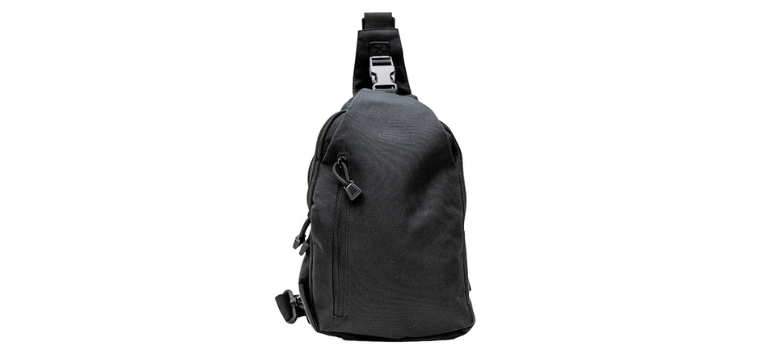
Personal-safety equipment needs more than a convenient place to sit when you aren't using it.
Byrna sells several carrying and organization accessories, including the Byrna Concealed Carry Sling Bag.
Secure keeping deserves the same attention as model selection.
Byrna offers several carrying and organization accessories, including the Byrna Concealed Carry Sling Bag. Byrna currently lists the bag as compatible with:
- Byrna CL
- Byrna CL-XL
- Byrna SD
- Byrna LE
The sling bag provides organized space for a compatible handheld launcher and related accessories.
Organization, however, is not the same as secure storage. Keep equipment stored so it prevents unauthorized access, especially around children or anyone not trained to handle it.
Follow Model-Specific Maintenance Guidance
CO₂-powered launchers rely on seals, moving parts, and internal components that require routine attention.
Byrna says maintenance frequency depends on factors including:
- Number of projectiles fired
- Length of time between uses
- Environmental conditions
The company's Maintenance Guide recommends starting maintenance only after confirming the launcher is unloaded and does not contain a CO₂ cartridge. Byrna also directs owners back to the applicable user manual for detailed procedures.
Model-specific documentation matters because the product range includes different calibers, CO₂ systems, magazines, and internal designs.
Byrna's Product Documents Library currently includes manuals and support material covering models such as the CL, SD, LE, TCR, and Mission 4.
Review Byrna's official maintenance and product-document resources.
Responsible Byrna Ownership Starts With Familiarity
The term less-lethal matters because it does not mean risk-free.
Responsible ownership starts with simple habits that support safer handling and greater familiarity:
- Read the official manual before handling the product.
- Match projectiles, magazines, and CO₂ supplies to the exact model.
- Use compatible inert products for training.
- Keep equipment away from unauthorized users.
- Store launchers and supplies securely.
- Follow model-specific maintenance instructions.
- Replace assumptions with official documentation whenever specifications differ between products.
Training and maintenance are especially important because the Byrna lineup contains several systems that look related but use different calibers and power sources.
Regulations and shipping requirements may vary by location and product type. Before purchasing, carrying, or transporting a Byrna product, review Byrna's official restrictions page and the rules applicable in your area.
Byrna's lineup gives owners several less-lethal formats to compare, but the differences go beyond size. The CL and CL-XL use .61-caliber systems, the SD and LE move into .68-caliber handheld platforms, and TCR and Mission 4 introduce larger configurations with their own CO₂, magazine, accessory, and documentation requirements.
The strongest approach is to choose deliberately and learn the system thoroughly. Match every supply to the exact model, train with compatible inert products, keep equipment secure, follow the maintenance schedule, and use Byrna's manuals whenever questions arise.
Explore Byrna's current models, training products, and official documentation, then focus on the setup you can understand, maintain, and handle responsibly.